Trending


A jar of honey sits on a kitchen windowsill in Perthshire through November. By Christmas it has turned into a pale, grainy brick, and the customer who bought it at the farmers' market has emailed to ask what went wrong. Nothing has gone wrong. That honey has done exactly what honey does. The only real question is whether you, as the beekeeper, decided the texture or left it to the weather.
Honey is a supersaturated solution. It holds far more dissolved sugar than water could normally carry at room temperature, and that arrangement is always looking for a way out. The two sugars doing most of the work are glucose and fructose. Glucose is much less soluble, so it drops out of solution first and builds crystals; fructose stays liquid and keeps the remainder syrupy.
Three things decide how quickly this happens:
Temperature and handling matter too, and those are the parts you can actually control.
Oilseed rape is the one that catches people out. In a cold spring it can set in the comb, and honey extracted from it may be solid within days, setting hard enough to make late jarring awkward. Ivy honey, a common late-season crop, behaves similarly. Dandelion and mixed blossom crops sit in the middle: runny at extraction, grainy by spring.
At the other end sits ling heather, which is thixotropic. It forms a gel that will not pour until you agitate it, and it resists crystallisation for years. You cannot cream heather the way you cream rape honey; it needs loosening before it goes into a jar.
Crystallisation runs fastest at around 14°C. That is roughly the temperature of a cool Scottish pantry in October, which is why honey left in a shed or utility room sets so reliably. A fridge slows the process by making the honey too viscous to move; a warm airing cupboard slows it too, and above 25°C honey may stay runny far longer than you expect.
To melt honey back, work gently. Stand the jar in a water bath at 40–45°C, with a thermometer in the water, and stir occasionally until the crystals disappear. Much above 50°C you start to lose the delicate aromas that make your honey worth buying, and prolonged high heat darkens colour and flavour. A microwave or a hot oven gives you no control. Once melted, honey will usually set again, often faster than before, because you have not removed the nuclei.
Texture is decided by crystal size, not by the honey itself. A few crystals growing freely become large and gritty. Millions of tiny crystals competing for the same sugar stay small, and small crystals feel smooth on the tongue. That is the whole idea behind soft set, or creamed, honey.
The tool is seed honey: a jar of honey already set with a fine grain. Stir it into runny honey at roughly 5–10% of the weight, keep the mixture at about 14°C, and the fine crystals spread through the batch. Warm the liquid honey to no more than 35°C first so it flows around the seed, but not so warm that you dissolve the seed you just added. Stir steadily; vigorous whipping adds air, and air makes honey pale and frothy rather than silky. Leave it alone once it has set, and jar it before it firms up too far.
In the UK you will see jars labelled runny, set, soft set and creamed. Soft set and creamed describe the same smooth texture; set honey is the harder, coarser version that natural crystallisation produces. Whatever you write on the label, the description has to be honest about what is in the jar.
Most complaints about crystallised honey come from customers who think it has gone off or been adulterated with sugar. A line on the label — "This honey has crystallised naturally. Spread it as it is, or stand the jar in warm water to soften" — prevents most of those emails. At a market stall, put a runny jar and a soft set jar of the same honey side by side and let people taste both. Texture becomes a choice rather than a fault.
If you supply shops, agree in advance whether they are getting soft set or set, and keep it consistent. Soft set travels better, spreads easily and does not drip. Keep records of what you sent where, so a texture change next season does not come as a surprise. Check current UK labelling requirements with your local trading standards or a food safety adviser before you print a new batch of labels.
After extraction, let your honey settle and note the crop and the date on the bucket. If it is rape or ivy, plan to deal with it quickly: hold it at around 14°C and cream it within a week or two, before it goes hard on you. For slower crops, leave a sample jar on the shelf and watch it. Write down what you did — seed percentage, temperature, date jarred — and taste the batch again at three months. Two or three seasons of notes will tell you more about your own honey than any general rule.
Crystallisation is not a fault to be stamped out. It is one of the few things in beekeeping you can steer with a thermometer, a jar of seed and a bit of patience, and it gives you a product that is genuinely different from anything on a supermarket shelf.
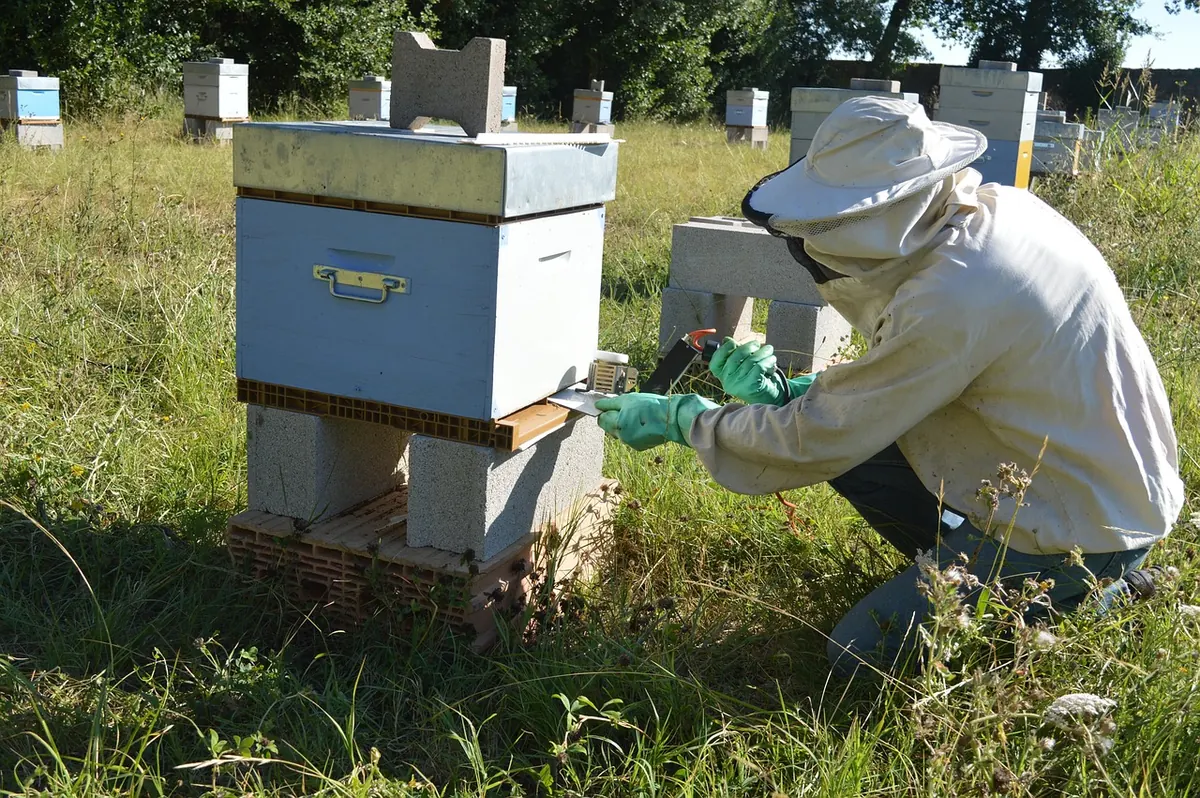
Photo: Septimiu / Pixabay